Despite local health facilities stocking essential drugs, the looming challenge of geographical barriers hinders lives from being saved. Recognizing the costly and physically taxing nature of the journey around Lake Victoria Island and other hard-to-reach remote communities, Health Access Connect understood that overcoming geographical barriers was imperative for effective healthcare delivery.
The introduction of Health Access Connects’ Medicycle program emerged as a lifeline, particularly for HIV patients grappling with urgent medical needs. The program was initially started on Kalagala Island in Lake Victoria to bring healthcare directly to those who needed it the most, especially HIV patients in the Kalangala Islands. As the Medicycle program gained momentum, community concerns arose about why only HIV/AIDs patients’ services were delivered.
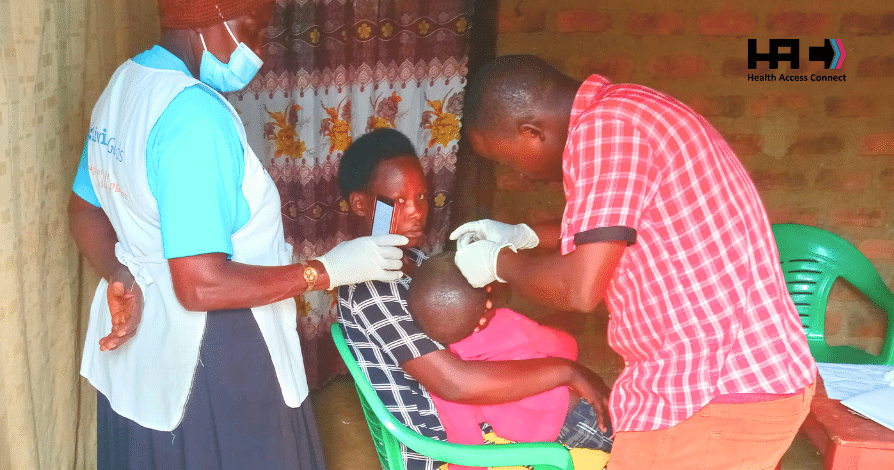
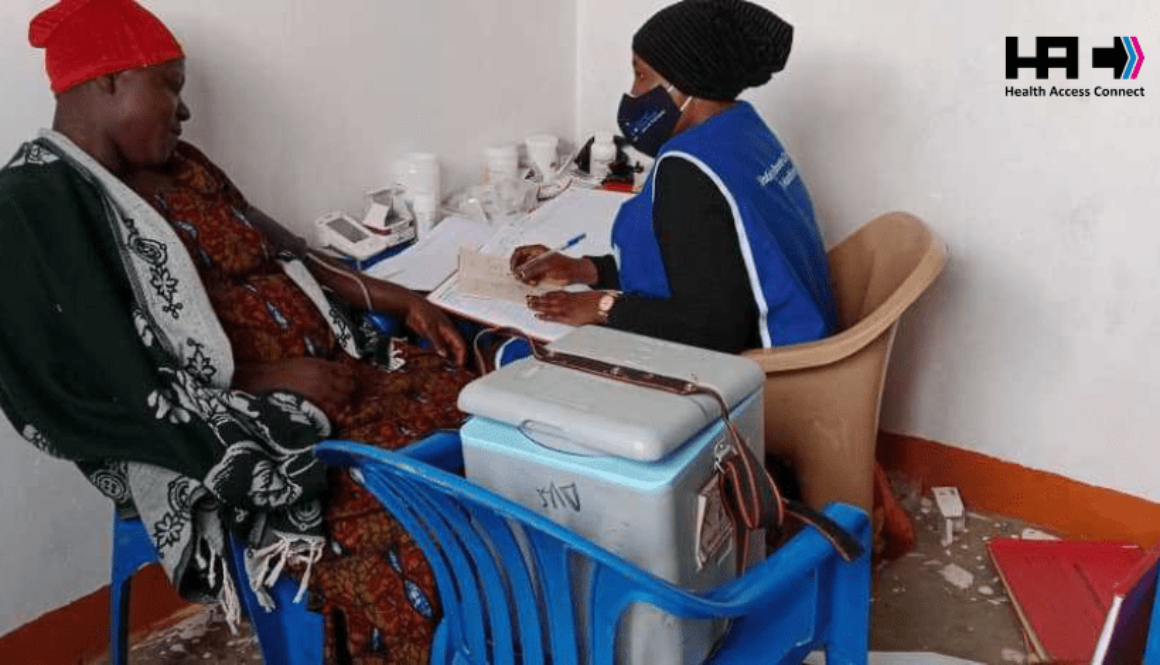
Health Access Connect responded dynamically by collaborating with local health facilities, broadening the scope of services offered during outreaches. This evolution marked a significant shift towards a more comprehensive and integrated healthcare approach. Currently, At Health Access Connects’ outreaches various medical services are provided; Health education, consultation, laboratory services, HIV tests and drugs provided, malaria treatment, pediatric services, immunizations, Antenatal Care, family planning, and all the primary health care services. This expansion not only addressed a spectrum of healthcare needs but also fostered a sense of inclusivity and collaboration within the community.
The medical-integrated health outreach program is currently being implemented in 13 districts in Central and Eastern Uganda and the mission is to serve one million people by 2030 in Uganda and beyond. What began as a focused initiative to provide HIV medication blossomed into a holistic program that not only overcame geographical barriers but also catered to diverse healthcare needs. Health Access Connect, through active community involvement and collaboration with local health facilities, stands as a beacon of hope, proving that healthcare can be both accessible and integrated, even in the most challenging environments.
Health Access Connect is committed to improving healthcare access in Uganda by creating sustainable access to healthcare services in the communities they serve. By integrating the innovative Local Community Associations (LCA) Model and remote monitoring system in their Medicycle Project, they are ensuring healthcare access becomes a long-term reality in Uganda.
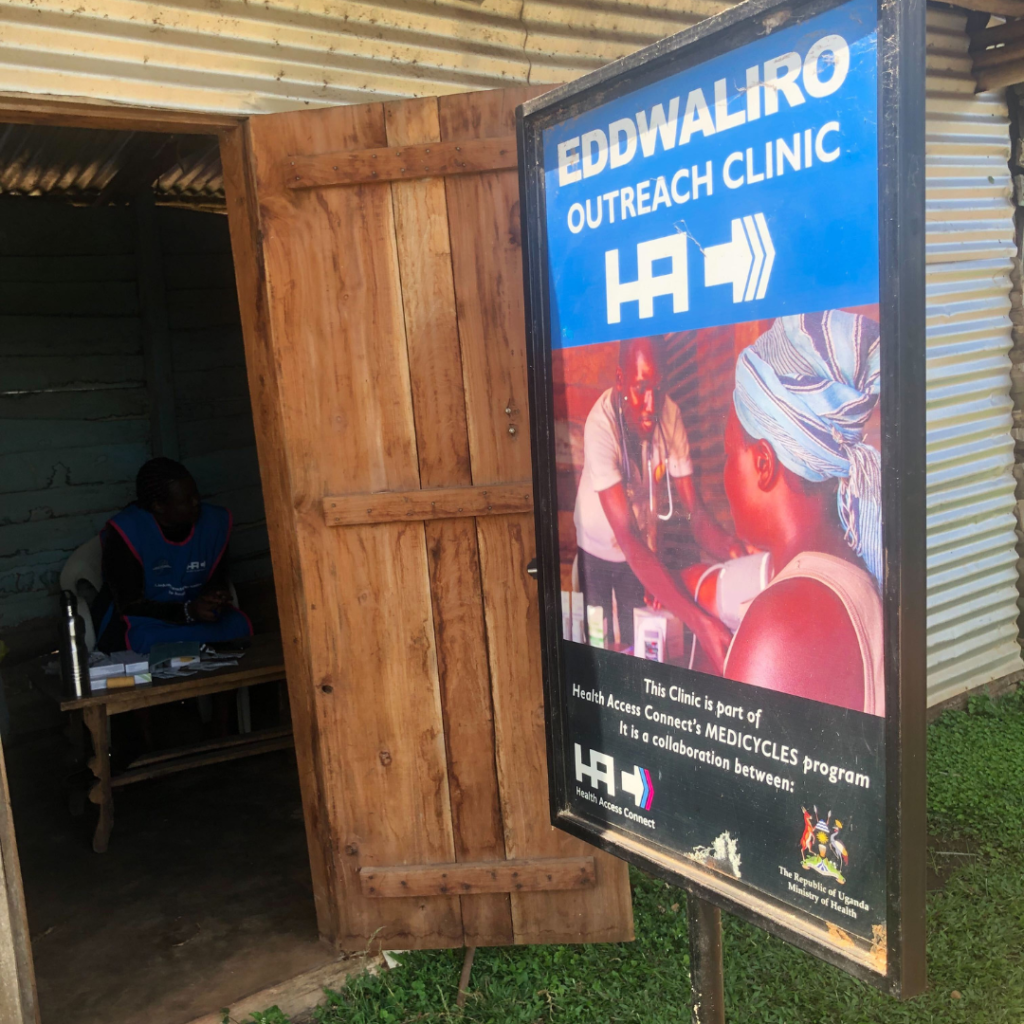
Medicycle Project: organizes community-supported systems to bring government medical doctors to the hard-to-reach communities which are 5 km and more from the nearest health facility for monthly or bimonthly one-day outreach clinics, where they provide free integrated primary healthcare services like antiretroviral treatment, antenatal care, immunizations, and family planning. The model is included as a recommended service delivery model in national HIV guidelines (p. 292). You can read more about the Medicycles model in our Global Health Action article: https://bit.ly/hac-model.
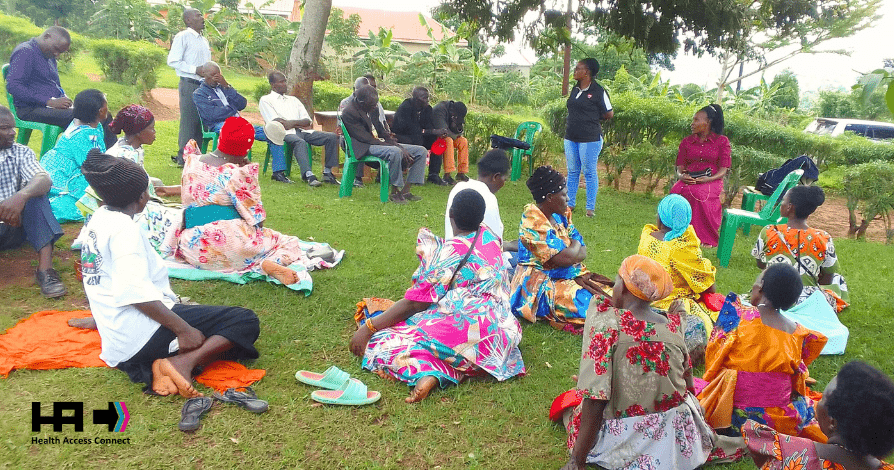
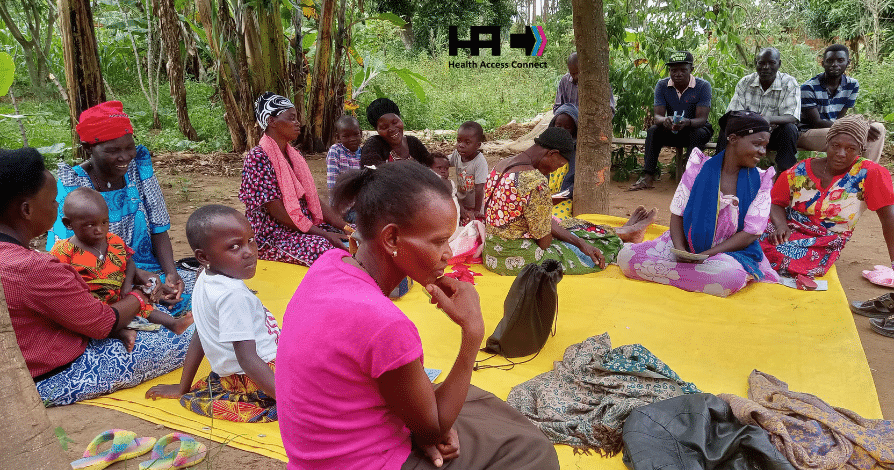
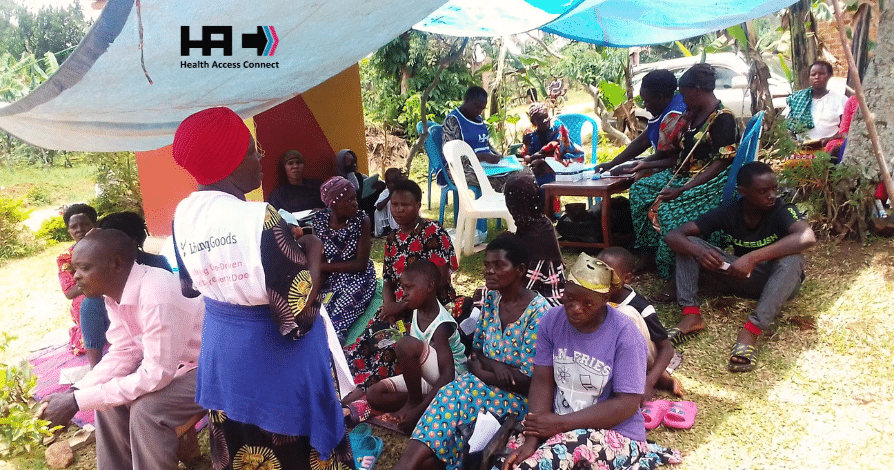
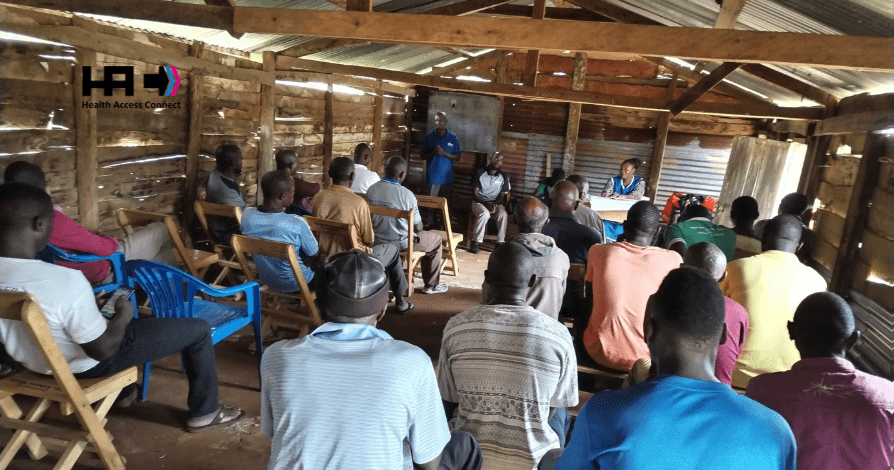
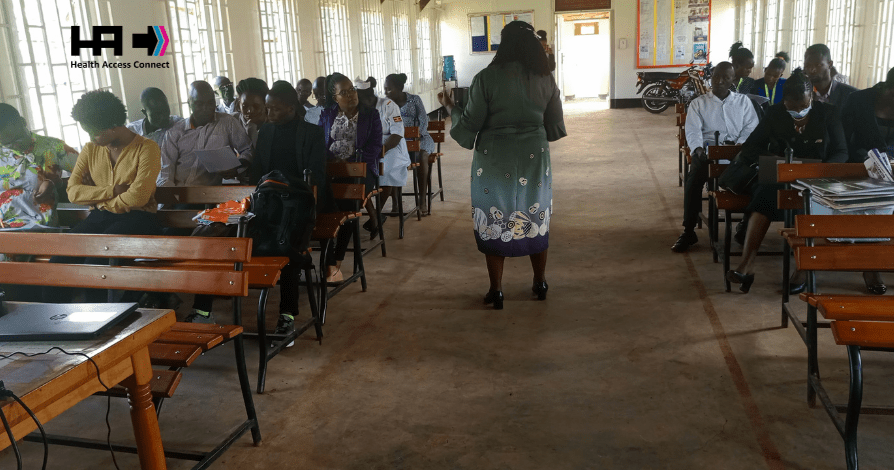
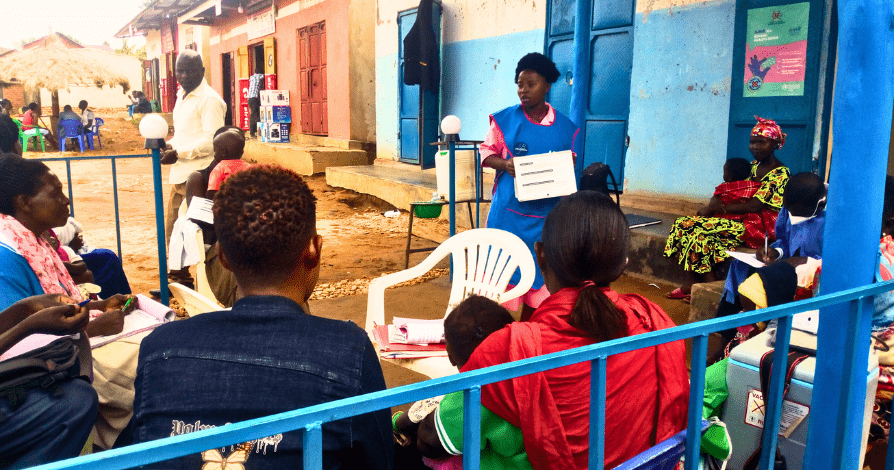
Community members listening to health Education before getting treatment
The Local Community Associations groups help HAC to organise community members to host health outreaches in the villages. This model encourages community members to actively engage in financing their healthcare by saving a modest amount each month, (2000 Ugandan shillings or $0.5 for each member) which funds are used for transporting government medical health workers to the outreach clinic. This collective effort not only creates a sustainable funding source for outreach clinics but also fosters a sense of ownership and responsibility among community members. It transforms healthcare from being a charity to a partnership, fostering community bonds and resilience.
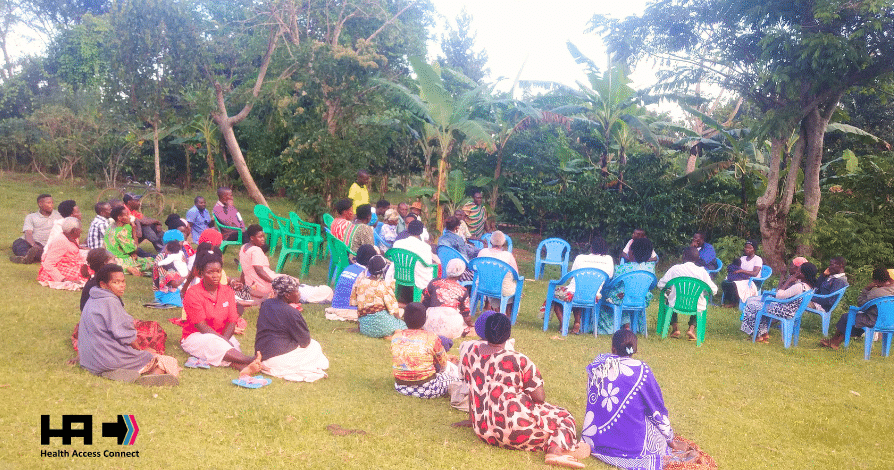
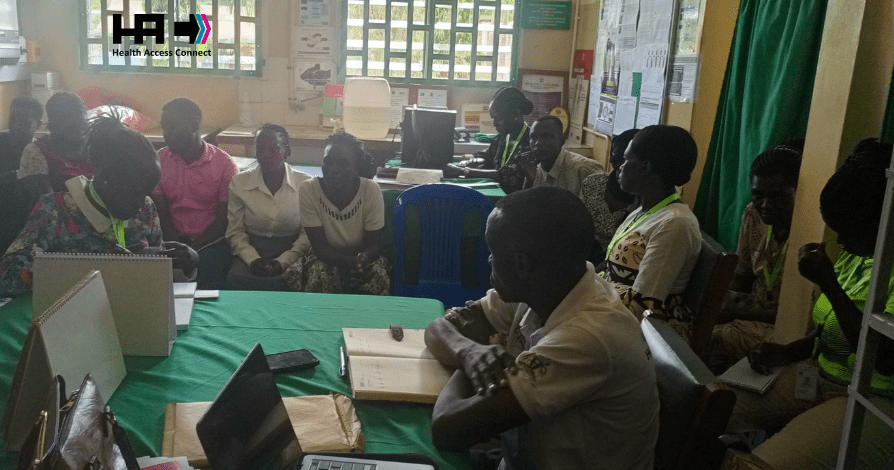
Community members of Luwunga village in Mpigi District during the LCA group formation meeting
Furthermore, Health Access Connect employs remote monitoring to ensure continuity in healthcare access. Even when field officers can’t be physically present, they supervise outreach clinics through phone calls, empowering community health workers to maintain high-quality healthcare services independently. This not only guarantees effective clinic operation but also promotes capacity building within the community. It’s a model for sustainable development that could be replicated in similar regions facing healthcare challenges.
Health Access Connect is on a mission to link remote communities to healthcare with the goal of setting the standard for how to bring sustainable, equitable health services to remote, marginalized communities. Their innovative strategies, dedication, and community engagement bring them closer to achieving this vision and creating healthier, brighter futures for Ugandan communities.
In a world where access to healthcare is a fundamental right, millions of people living in remote and underserved communities still struggle to receive the essential medical attention they need. Health Access Connect (HAC), a dynamic organization committed to improving healthcare access in remote areas, has initiated several transformative projects aimed at bridging this critical gap. In this blog post, we will delve into four of HAC’s innovative initiatives: Medicycles, Treat & Teach, Technical Assistance, and Digital Square. Let’s journey into these impactful projects that are making healthcare accessible to those who need it most.
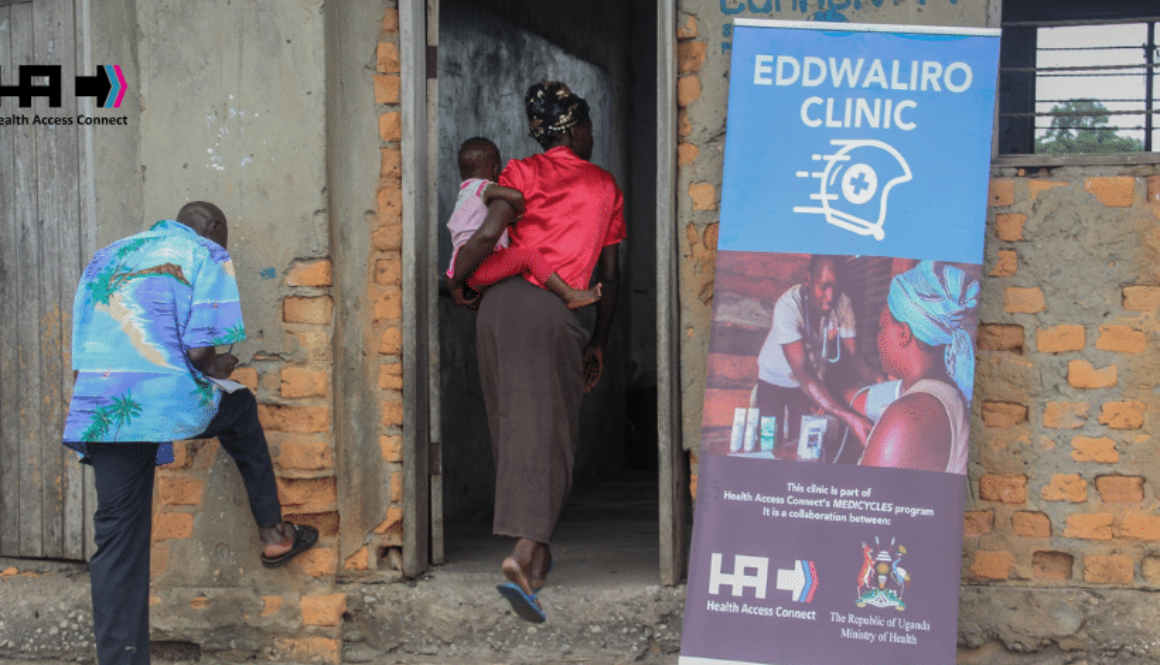
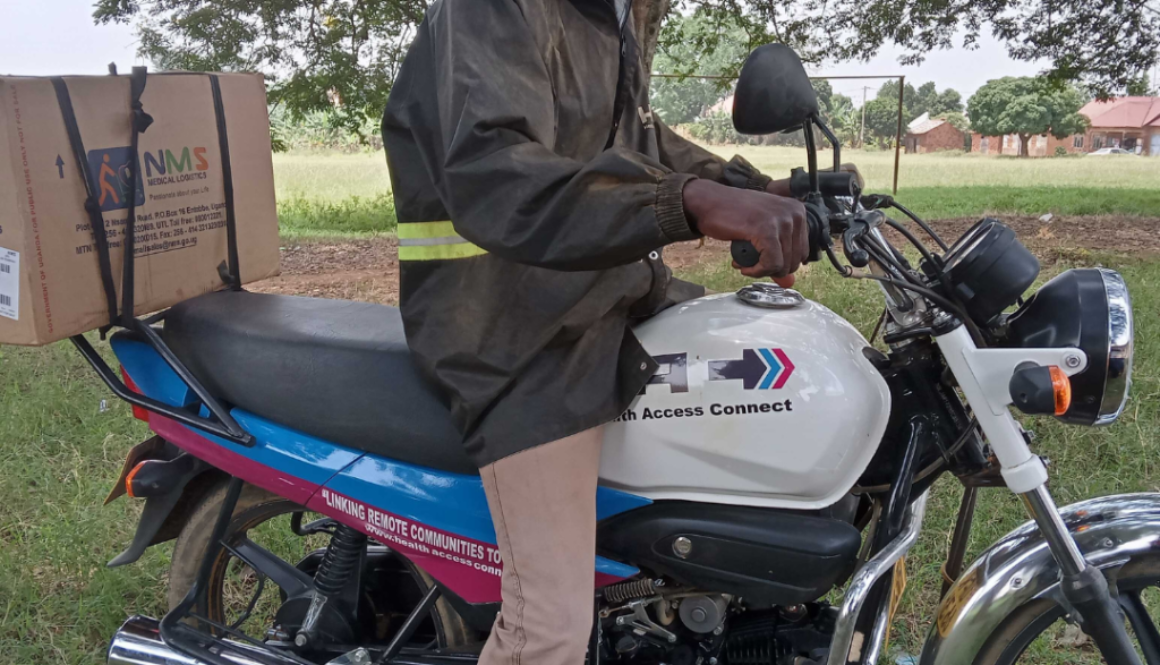
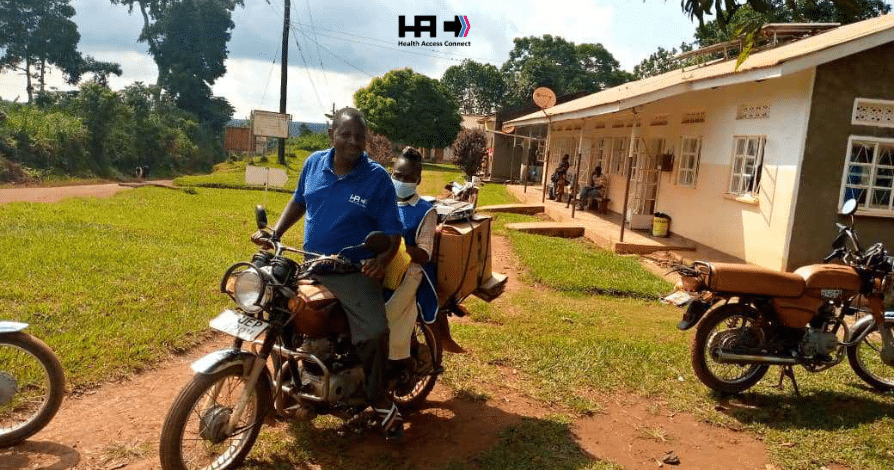
A VHT and a Medical Worker starting their Journey to a community clinical outreach
Medicycles: Closing the Distance to Healthcare
HAC’s Medicycles project is a beacon of hope for remote communities located more than 5 kilometres from the nearest health facility. These communities often face challenges in accessing government doctors, nurses, and medicines regularly. To address this issue, HAC collaborates with local Community Associations (LCAs) to organize monthly or bimonthly one-day outreach clinics. Every member of the LCA contributes 2000 Ugx (0.53 $) that will be used to help transport and facilitate the government workers to come to their communities to test and treat various medical issues ranging from Malaria, STDs, STIs, HIV, immunization, Antennal Care and many more.
This model has not only improved access to primary healthcare but has also been recognized as a recommended service delivery model in national HIV guidelines. You can explore more about the Medicycles model in HAC’s detailed Global Health Action article. https://bit.ly/hac-model.
Treat & Teach: Empowering Communities with Family Planning
Treat & Teach is another remarkable initiative by HAC aimed at improving access to family planning services in remote and underserved communities. The project identifies the gaps in family planning access, including the lack of on-the-job experience of healthcare workers, commodity stockouts, limited awareness of contraceptive methods, and the challenge of reaching distant healthcare facilities.
To address these issues, HAC establishes outreach clinics, conducts on-the-job health worker training, manages the supply chain efficiently, generates demand through Community Health Workers (CHWs), and offers family planning services. Since its inception in 2019, Treat & Teach has not only met but exceeded Couple Years of Protection (CYP) targets, thanks to its innovative and holistic approach.
Technical Assistance: Transforming ART Services
HAC’s Technical Assistance project focuses on enhancing the convenience, outcomes, and overall health system performance for individuals receiving antiretroviral treatment (ART). Collaborating with the Africa Resource Centre (ARC), HAC has taken on the task of adapting the successful Medicycles outreach clinic model into national policy. They provide training to implementing partners on setting up outreach clinics and promoting the adoption of Community Led Drug Distribution Points (CLDDP) nationwide.
Additionally, HAC works closely with the Ministry of Health (MOH) to establish dashboards, distribute essential materials, and coordinate with partners to ensure seamless ART services delivery.
Digital Square: Improving Visibility on Supply Chain Performance in Uganda
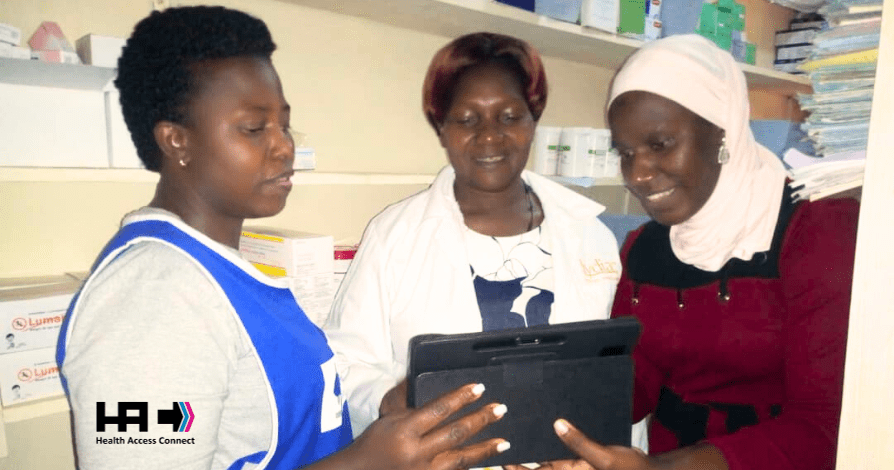
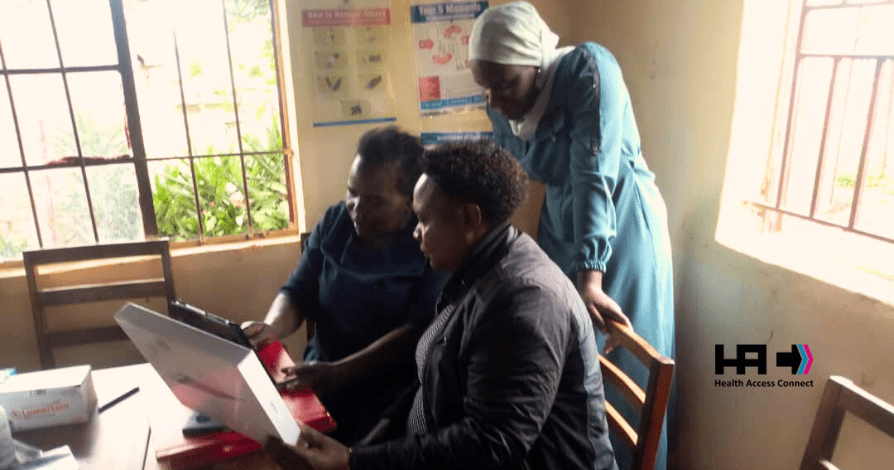
In a groundbreaking partnership with Signalytic, HAC is committed to enhancing supply chain performance in the last mile in Uganda. This project involves equipping rural districts with appropriate hardware-software packages tailored to their limited infrastructure. HAC is ensuring better coordination and visibility in the healthcare supply chain through training of Health workers and responsible persons at the health facilities on how to track drug stocks with the S+ machines and the phones .
Moreover, on-the-job coaching, IT support, and advocacy efforts aimed at decision-makers are further strengthening the healthcare supply chain in Uganda, ultimately benefiting those in need of essential medical supplies and medications.
Through the Medicycles, Treat & Teach, and Technical Assistance projects, we are making a significant impact on primary healthcare, family planning, and ART services. Our Digital Square project to enhance supply chain performance in Uganda is yet another testament to our dedication to creating a healthier world for all. As we look to the future, we can only hope that more organizations and individuals will join hands with HAC to bridge the healthcare gap and ensure that everyone, regardless of their location, has access to quality healthcare services.
At the center of Kitoffaali village, where access to good health is a challenge resides Nakacwa Cissy, a dedicated and empowered member of the Village Health Team (VHT). Her journey began in 2021 when she embarked on a transformative training experience with Health Access Connect (HAC) at Maria Flo Hotel in Masaka. Today, Nakacwa Cissy shares her remarkable story of growth, impact, and the confidence she gained through this journey.
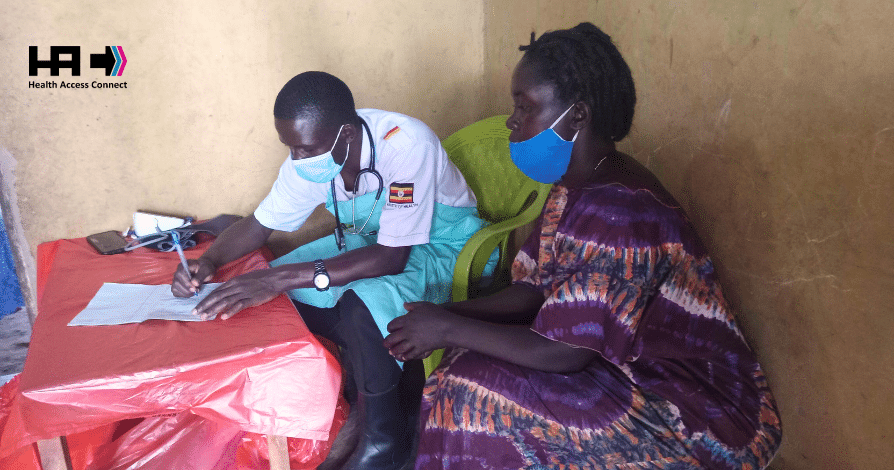
Family Planning Field Officer, Shakira Kalembe interviewing Miss Cissy
Empowering Change, One Woman at a Time
As a VHT, Nakacwa Cissy’s role extends far beyond the boundaries of her village. She proudly reveals that her efforts have led to preventing of countless unwanted pregnancies among the women she serves. Armed with knowledge and skills gained from the training, she administers injectables and educates women on long-term family planning methods. These interventions not only empower women but also contribute to the overall well-being of the community.
“I am proud to be a VHT because I have saved many women from getting unwanted pregnancies,”
Nakacwa Cissy reflects with a sense of accomplishment.
Her words echo the impact that a single empowered individual can have on an entire community.
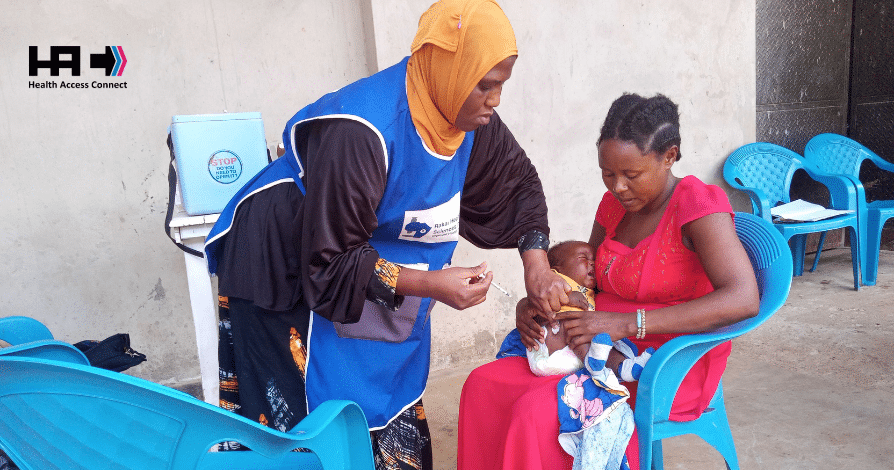
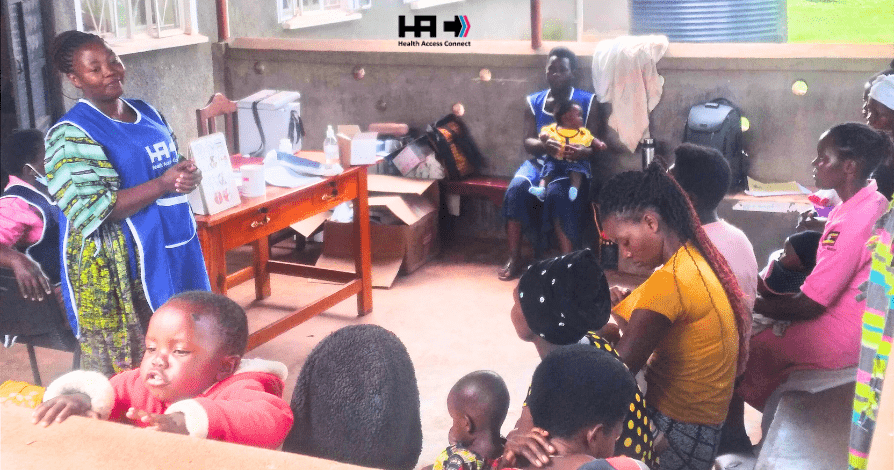
A midwife educating mothers about family planning
Nakacwa Cissy acknowledges that the training provided by HAC has been instrumental in establishing trust with her clients. Through her engagement, she has not only gained the respect of the women she serves but has also expanded her network of friends, including both men and women. This network acts as a powerful conduct for raising awareness about the importance of family planning.
“Building relationships is key. I actively engage with them to spread awareness,”
Miss Cissy shares. It’s a testament to the ripple effect that informed and empowered individuals can create.
Nakacwa Cissy candidly discusses the challenges faced by VHTs. She highlights the scarcity of long-term family planning methods as a minor hurdle, which was resolved after some time. It’s a reminder that progress is often accompanied by obstacles, but the determination to overcome them is what drives lasting change.
Nakacwa Cissy concludes her testimonial with gratitude. She thanks the Health Access Connect team for their exceptional services, which have empowered her to make a difference in her community. She also humbly acknowledges the value of continuous learning and invites constructive feedback to aid her growth as an individual and a VHT.
In the tale of Nakacwa Cissy, we witness the power of knowledge, training, and empowerment. Through her experiences, we are reminded that the impact of a single individual can reverberate through an entire community. As she continues her journey, one thing remains clear: Nakacwa Cissy’s story is an inspiring example of the potential within us all to create positive change.
The commendable efforts of Village Health Teams (VHTs) in assisting Health Access Connect to link remote communities to healthcare services are truly noteworthy. Their sense of pride in this work makes collaborating with them even more seamless.
Miss Cissy is not alone in her dedication; we have observed several VHTs who take immense pride in serving their communities. One such example is Salongo Ssemukasa Evalisto. Residing in Bulimire village, Kakkamba parish, Kisekka sub-county, Salongo is a VHT stationed at Kiwangala Health Centre IV in Lwengo district, which falls under Bukoto South.
“I am glad because these days I am quite a different person since I treat and convey health messages to people which not only benefit the recipients but also turns me into a more reputable person than ever before.”
Mr. Ssemukasa brags
HAC Family Planning Office Miss Shakira with Mr Ssemukasa Evalisto having a chat before setting out for the outreach clinic
The efforts led by Health Access Connect (HAC) With Support from the Bergstrom Foundation in Low-Density High Frequency (LDHF) on-job training of healthcare workers and Village Health Teams in family planning across Kalangala, Masaka, and Lwengo districts stand as a remarkable stride towards improved healthcare services and empowered communities.
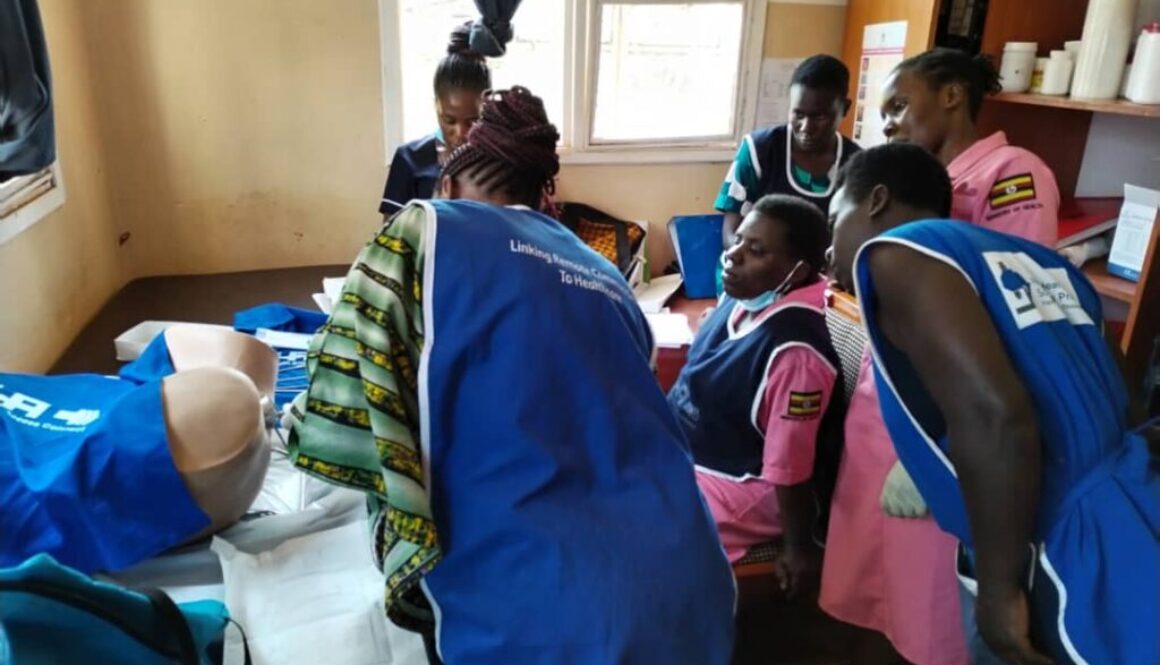
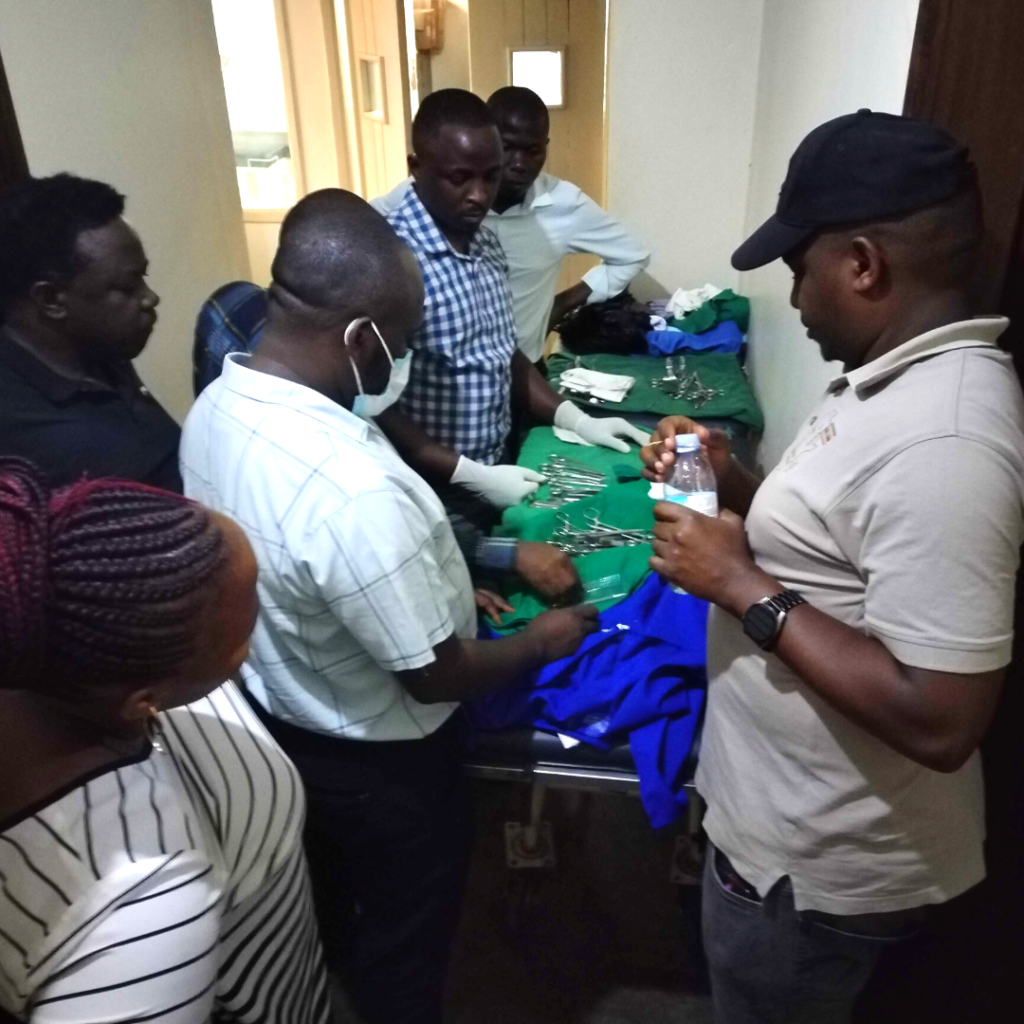
Four medical doctors and HAC staff attending Family Planning method Insertion Training The practical session of the training
By focusing on the grassroots level and ensuring consistent, comprehensive training, HAC is not only imparting knowledge but also nurturing lasting change. As these districts continue to benefit from HAC’s initiatives, the ripple effects will undoubtedly be felt in healthier families, educated communities, and ultimately, a more robust healthcare system for all. Through these ongoing endeavors, HAC sets a commendable example for organizations aiming to bring about meaningful transformations in underserved regions.